

The future of cancer detection begins before symptoms appear.

Kiluma Biosciences is developing next-generation oncology diagnostics designed to identify biological signals associated with cancer risk and disease development earlier than conventional approaches — enabling earlier intervention, better outcomes, and more personalized care.

Beginning with one of the deadliest cancers.

Pancreatic cancer remains one of the most lethal forms of cancer because diagnosis often occurs after disease has progressed beyond curative intervention. Earlier biological detection represents one of oncology's largest unmet needs.

~13%

5-year survival rate

<20%

Detected early enough for surgery

~52K

U.S. deaths each year

#3

Leading cause of cancer death by 2030 (projected)

Cancer develops long before it is clinically diagnosed.

STAGE 1

Healthy Cell

Baseline biology

STAGE 2

Molecular Changes

Subclinical signals

STAGE 3

Early Disease Signals

Detectable interception window

STAGE 4

Clinical Disease

Current diagnostic threshold

Today's medicine acts at the right side of this continuum. Kiluma is engineering tools that act on the left — where intervention has the greatest potential to change outcomes.

OncoIntercept™

A next-generation cancer interception platform built upon the proprietary Intercept IQ™ architecture. OncoIntercept is not a single biomarker test — it is a comprehensive disease interception platform designed to detect biological changes associated with cancer development at the molecular level, before traditional clinical signs emerge.

Cell-free DNA

Fragmented tumor and tissue DNA circulating in plasma.

Epigenetic Signatures

Regulatory states that change before structural mutations.

Methylation Markers

Tissue-of-origin and disease-specific methylation patterns.

Protein Biomarkers

Secreted and shed proteins reflecting tissue distress.

Inflammatory Markers

Systemic immune signaling associated with disease initiation.

Metabolic Biomarkers

Metabolite shifts revealing altered cellular bioenergetics.

Clinical Risk Factors

Demographics, history, and longitudinal phenotype data.

AI Pattern Recognition

Models that integrate signals invisible to any single assay.

The goal: move cancer detection upstream — where intervention may be more effective and outcomes potentially improved.

Pancreatic cancer begins long before symptoms.

Pancreatic cancer often develops silently, with biological and molecular changes occurring long before symptoms appear or tumors become detectable through conventional imaging. By the time many patients are diagnosed, the disease has frequently progressed to advanced stages. Kiluma Biosciences is developing molecular diagnostic technologies designed to investigate the earliest biological indicators of pancreatic stress and disease.

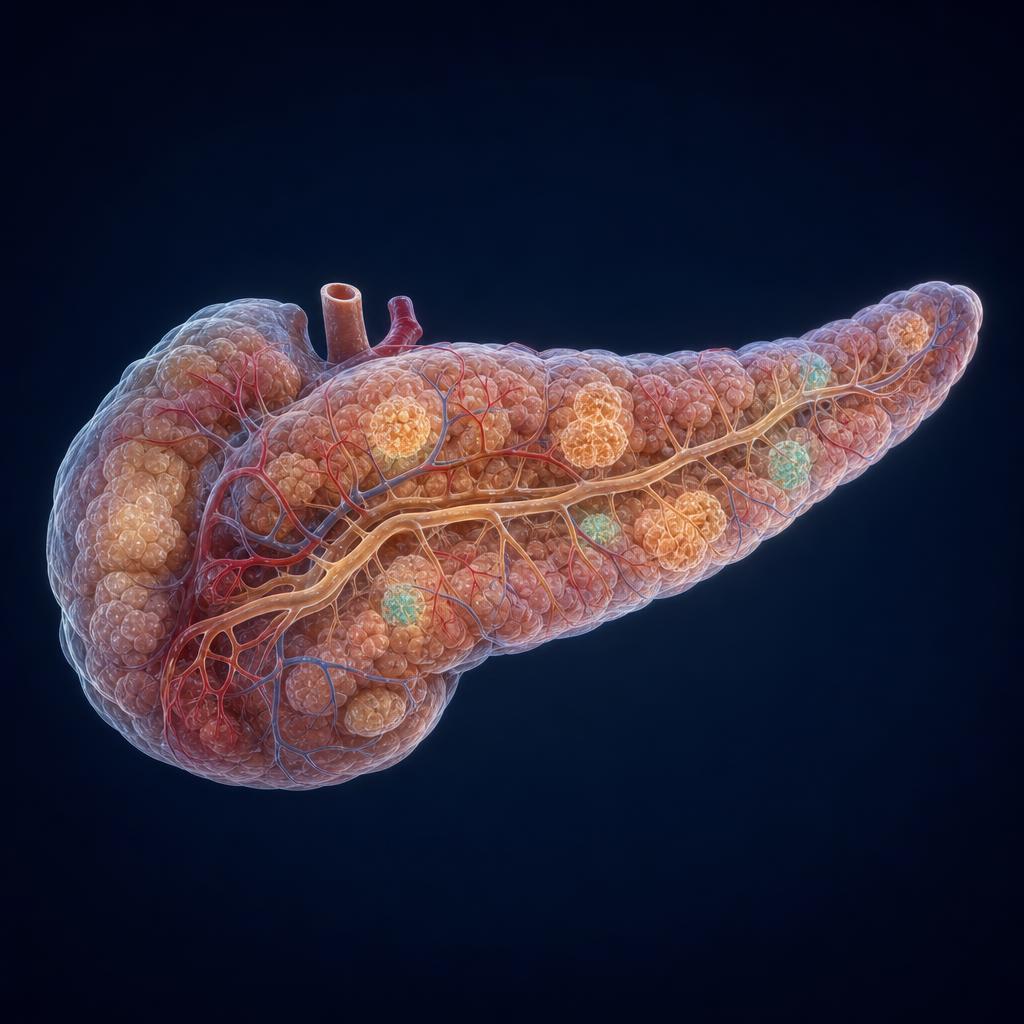
Pancreas illustration showing disease progression stage

Stage 01 / 06

Healthy Biology

Healthy Pancreas

Baseline pancreatic biology. Endocrine and exocrine compartments operate within normal physiological parameters.

Continuous loop · pauses on hover

Detection Window

Healthy Biology

Molecular Detection Window

Clinical Symptoms

Traditional Diagnosis

Biological changes may precede conventional clinical diagnosis. Kiluma's technology is in research and development and has not been clinically validated for cancer detection.

Stage Timeline

Healthy

Stress

Precancer

Early Tumor

Local

Advanced

The clinical stakes of detecting biology earlier.

Earlier Clinical Investigation

Understanding molecular changes before symptoms become apparent.

More Treatment Options

Earlier diagnosis may increase the range of therapeutic strategies available, depending on disease stage.

Improved Research Opportunities

Earlier identification may help support clinical research and patient enrollment in future studies.

Precision Medicine

Blood-based molecular biomarkers may provide additional biological insights beyond conventional imaging alone.

Kiluma Biosciences is investigating blood-based molecular diagnostics designed to evaluate potential biological indicators of pancreatic stress and disease. This technology is in research and development and has not been clinically validated. Statements above describe research goals and do not represent clinical performance claims.

Scientific foundation for earlier pancreatic disease detection.

A growing body of peer-reviewed research demonstrates that pancreatic disease develops through progressive molecular and cellular changes long before symptoms become apparent. Advances in cell-free DNA, tissue-specific methylation, epigenetic biomarkers, protein biomarkers, and multi-omic analysis are creating new opportunities to investigate pancreatic biology through minimally invasive blood-based testing.

The publications below provide the scientific rationale informing Kiluma's research approach. They are independent works by other investigators and do not validate Kiluma's proprietary technology.

Genes
2020

Cell-Free DNA Methylation: The New Frontiers of Pancreatic Cancer Biomarkers

Pisapia et al.

Reviews how chronic pancreatic injury, precancerous lesions, and tissue-specific DNA methylation changes may precede pancreatic cancer development, highlighting circulating cfDNA methylation as a promising approach for investigating early biological changes within the pancreas.

Biomarker Research
2023

Diagnosing and Monitoring Pancreatic Cancer Through Cell-Free DNA Methylation

Liu et al.

Examines how circulating cfDNA methylation, liquid biopsy technologies, and integrated biomarker strategies may improve pancreatic cancer detection and monitoring — emphasizing combinations of molecular signals over any single biomarker.

pmc.ncbi.nlm.nih.govRead Publication
Cancers
2019

Deciphering DNA Methylation Signatures of Pancreatic Cancer

Henriksen et al.

Explores how chronic inflammation, pancreatic injury, and epigenetic dysregulation contribute to pancreatic cancer development, and highlights DNA methylation as a promising biomarker for understanding early disease biology.

pmc.ncbi.nlm.nih.govRead Publication
Gut
2024

Protein Biomarkers and Alternatively Methylated Cell-Free DNA Detect Early Stage Pancreatic Cancer

Berger et al.

Demonstrates how combining protein biomarkers with methylated circulating cfDNA may improve early pancreatic cancer detection, supporting a multi-analyte, multi-omic diagnostic strategy.

digitalcommons.library.tmc.eduRead Publication
Clinical Gastroenterology & Hepatology
2023

Epigenomic Blood-Based Early Detection of Pancreatic Cancer Employing Cell-Free DNA

Cao et al.

Investigates blood-based epigenomic approaches using circulating cfDNA to evaluate early pancreatic cancer biology and reinforces the growing role of epigenetic biomarkers in minimally invasive diagnostics.

Nature Communications
2020

Detection of Early Stage Pancreatic Cancer Using 5-Hydroxymethylcytosine Signatures in Cell-Free DNA

Guler et al.

Demonstrates that epigenetic 5-hydroxymethylcytosine signatures in circulating cfDNA may help distinguish early-stage pancreatic cancer, highlighting the potential of advanced epigenomic profiling.

JCI Insight
2020

Multiplexing DNA Methylation Markers to Detect Circulating β-Cell DNA

Neiman et al.

Landmark work showing that tissue-specific methylation signatures can identify circulating beta-cell-derived DNA in blood — demonstrating how organ-specific cell death may be detected through blood-based molecular analysis.

insight.jci.orgRead Publication

Investigating the earliest indicators of pancreatic stress.

Rather than focusing solely on detecting established disease, Kiluma Biosciences is advancing a molecular diagnostics platform designed to investigate the earliest biological indicators of pancreatic stress.

Our research is informed by growing evidence that pancreatic disease may involve progressive molecular changes — including endocrine dysfunction, exocrine dysfunction, tissue-specific cell death, epigenetic alterations, circulating cell-free DNA, protein biomarkers, and inflammatory signaling — long before conventional imaging or clinical symptoms emerge.

By integrating these biological signals through advanced molecular analysis and artificial intelligence, we aim to support the future development of earlier and more comprehensive approaches to pancreatic disease investigation.

Platform Workflow

From healthy biology to molecular intelligence.

01

Healthy Pancreas

02

Cellular Stress

03

Beta-Cell Biology

04

Epigenetic Alterations

05

Cell-Free DNA Release

06

Protein Biomarkers

07

Artificial Intelligence

08

Multi-Omic Molecular Intelligence

09

Earlier Biological Insight

Kiluma Biosciences is researching blood-based molecular diagnostics designed to evaluate potential biological indicators of pancreatic stress. This technology is in research and development and has not been clinically validated. Inclusion of any publication above does not imply endorsement of Kiluma's proprietary technology.

Beyond detection. Toward interception.

Most cancers develop over many years before diagnosis. The future of healthcare is not simply diagnosing disease earlier — it is identifying the biological processes that precede disease itself.

Traditional Healthcare

01Symptoms
02Imaging
03Diagnosis
04Treatment

Reactive. Symptom-driven. Often too late.

The Kiluma Vision

01Biological Change
02Risk Identification
03Disease Interception
04Early Intervention
05Improved Outcomes

Proactive. Biology-driven. Designed to change outcomes.

A multiomic approach to root-cause detection.

No single biomarker can fully explain disease risk. Kiluma's long-term vision is to integrate multiple biological data layers into a comprehensive disease interception model capable of identifying subtle patterns associated with cancer development. The future of diagnostics is multiomic.

01

Genomics

Inherited and somatic variants that establish baseline risk and drive tumor biology.

02

Epigenomics

Methylation and chromatin state — the earliest layer of disease reprogramming.

03

Proteomics

Functional protein output reflecting active disease processes in real time.

04

Metabolomics

Small-molecule fingerprints of cellular bioenergetics and tumor microenvironment.

05

Inflammation & Immune

Cytokine and immune-cell signaling that often precedes overt malignancy.

06

Clinical & Lifestyle

Phenotypic context that grounds molecular signals in individualized risk.