

OncoIntercept™ — earlier answers in pancreatic cancer.
Kiluma Biosciences is advancing OncoIntercept™, a pancreatic cancer–focused diagnostic program built on the InterceptIQ™ Platform, with the goal of identifying molecular signals associated with pancreatic cancer earlier in the disease process.
OncoIntercept™
Pancreatic Cancer–Focused Diagnostic Program
OncoIntercept™ is being developed on the InterceptIQ™ Platform to evaluate molecular signals associated with pancreatic cancer biology. The program integrates cfDNA analysis, sequencing, molecular chemistry, tumor marker evaluation, and AI-enabled analytics — designed to support earlier detection, risk assessment, and future clinical decision-making.
Current Development Focus
Kiluma is actively pursuing partner-supported studies to accelerate validation.

Translational Research
From discovery to actionable molecular insight.
Pancreatic Focus
Seeking to Detect Pancreatic Cancer Earlier
Pancreatic cancer is often diagnosed after significant disease progression, when treatment options are limited and survival outcomes are poor. Kiluma Biosciences is developing OncoIntercept™ to evaluate molecular signals associated with pancreatic cancer biology with the goal of supporting earlier detection, risk assessment, and future clinical decision-making.
- 1
Healthy Pancreas
Baseline biology, no detectable disease.
- 2
Early Molecular Changes
Subtle cfDNA and methylation shifts begin to appear.
- 3
Preclinical Disease
Biology is changing — symptoms have not yet emerged.
- 4
Localized Pancreatic Cancer
Tumor is confined; surgical options may still be viable.
- 5
Advanced Disease
Regional spread; treatment options narrow rapidly.
- 6
Metastatic Cancer
Distant spread; survival outcomes are poor.
Goal
Our goal is to move detection earlier in the timeline.
Partnerships
Actively Building the Validation Network
Kiluma is actively seeking partnerships with biobanks, clinics, academic medical centers, cancer centers, and research organizations to support analytical validation, retrospective sample studies, and future clinical validation programs.
Validation Workflow

Academic & Clinical Collaboration
A shared commitment across academia, hospitals, and industry.
The InterceptIQ™ Workflow
From Blood Sample
to Molecular Insight.
Every stage of the InterceptIQ™ workflow is designed to transform a simple blood sample into high-resolution molecular data — supporting the development of earlier cancer detection technologies.



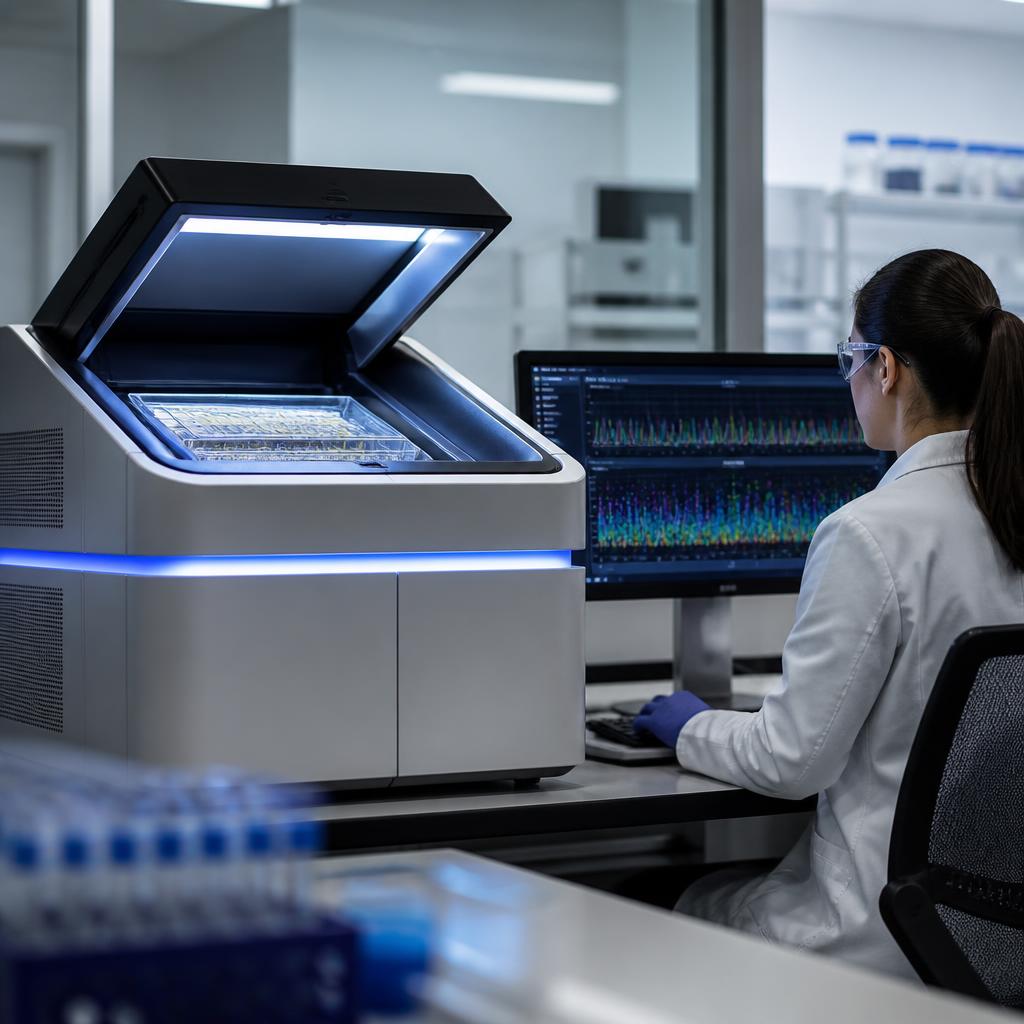


It begins with a single tube of blood.
Stage 01 · Specimen
Blood Collection
A standard venous draw into an EDTA tube preserves the integrity of circulating cell-free DNA. Each specimen is barcoded, chain-of-custody tracked, and entered into the laboratory information system before it reaches the bench.
- Specimen
- EDTA plasma, 10 mL
- Handled by
- Clinical phlebotomy
- Tracking
- Barcoded chain-of-custody
Stage 02 · Pre-analytics
Plasma Processing
A controlled two-stage centrifugation protocol separates plasma from cellular blood components without lysing white cells. The acellular plasma layer carries the circulating cell-free DNA pool that downstream chemistry will interrogate.
- Method
- Two-stage centrifugation
- Performed by
- Laboratory technologist
- Output
- Cell-free plasma fraction
Stage 03 · Wet lab
Molecular Analysis
Automated liquid-handling systems perform cfDNA extraction, conversion chemistry, library preparation, and target enrichment with picoliter-level reproducibility — the foundation of low-input, low-abundance signal detection.
- Instrumentation
- Automated liquid handlers
- Performed by
- Molecular biologists
- Output
- Sequencing-ready libraries
Stage 04 · Genomics
Sequencing & Biomarker Evaluation
High-depth next-generation sequencing captures methylation patterns, fragmentomic features, and genomic variation across targeted regions. Reads are aligned and interrogated for tumor-associated signals relevant to pancreatic cancer biology.
- Platform
- Next-generation sequencing
- Signal classes
- Methylation · fragmentomics · variants
- Performed by
- Genomic scientists
Stage 05 · Analytics
AI-Assisted Pattern Recognition
Machine-learning models integrate multi-omic features and surface candidate molecular patterns against curated reference cohorts. The output is a calibrated, probabilistic signal — designed to support, not replace, scientific interpretation.
- Method
- Multi-omic ML models
- Performed by
- Computational biologists
- Output
- Calibrated molecular signals
Stage 06 · Translational
Scientific Interpretation
Molecular pathologists and translational scientists integrate sequencing data, biomarker evidence, and computational outputs into a single research-stage interpretation — intended to inform the future development of clinical decision-making tools.
- Reviewed by
- Molecular pathologists
- Inputs
- Sequencing · biomarkers · ML signals
- Output
- Research-stage interpretation
Integration
A Multi-Layered Diagnostic Development Engine
OncoIntercept™ is being developed through the integration of molecular biology, cfDNA analysis, sequencing, chemistry, tumor marker evaluation, and AI-enabled analytics. The goal is to identify patterns that may support earlier insight into pancreatic cancer biology.
OncoIntercept™ Signal Development
Six integrated technology layers converge into a single research-stage program designed to generate, refine, and clinically validate OncoIntercept™ pancreatic cancer signals.
- Candidate multi-omic biomarker signatures
- AI-derived risk stratification signals
- cfDNA molecular profiles with pancreatic cancer relevance
- Analytical and clinical validation datasets
- Regulatory and commercial development strategy
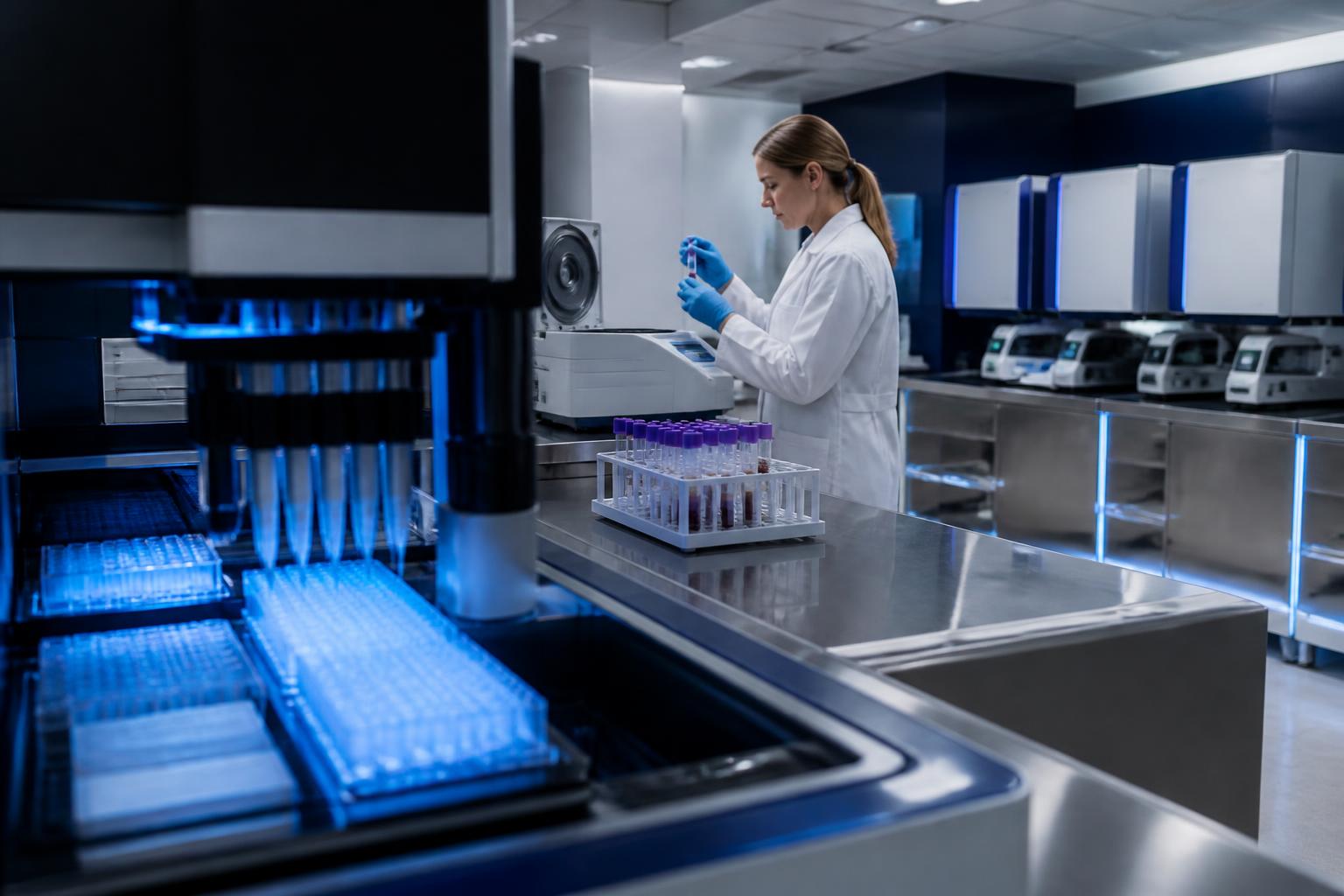
Advanced Clinical Laboratory
Built on cutting-edge molecular diagnostics infrastructure.
Program Stage
OncoIntercept™ Development Pipeline
A structured path from discovery to commercial readiness. OncoIntercept™ is currently focused on biomarker development and analytical validation preparation.
Discovery
Candidate biomarker identification
Signal hypothesis generation
Feasibility proof-of-concept
Biomarker Selection
Panel down-selection
Preliminary sensitivity / specificity
Assay feasibility lock
Analytical Validation
Analytical sensitivity & specificity
Intra- / inter-run precision
Reproducibility across sites
Current Focus
Biobank Studies
Retrospective cohort profiling
Signal confirmation in banked samples
Preliminary clinical performance
Clinical Validation
Prospective study design
Clinical sensitivity & specificity
PPV / NPV estimates
Regulatory Strategy
Pre-submission meetings
Validation package assembly
CLIA / LDT or PMA pathway
Commercial Readiness
Assay manufacturing scale-up
Laboratory transfer & training
Launch readiness checklist
Note: Kiluma is actively pursuing partner-supported studies to accelerate validation.
Underlying Technology Platform
InterceptIQ™ — the engine behind OncoIntercept™.
Six integrated technology layers powering a single diagnostic program. Each layer contributes to earlier detection, sharper signal resolution, and more actionable clinical insights.
cfDNA Liquid Biopsy
Blood-based detection of circulating cell-free DNA enabling minimally invasive screening.
Multi-Omic Biomarker Analysis
Methylation, genomic, and proteomic signals integrated for higher diagnostic precision.
Molecular Diagnostics
Proprietary chemistry optimized for low-abundance pancreatic cancer signals.
AI-Driven Data Interpretation
Custom algorithms transforming complex multi-omic data into actionable insights.
Risk Stratification Algorithms
Probabilistic models classifying patients by individualized cancer risk.
Longitudinal Disease Monitoring
Serial testing infrastructure for ongoing surveillance of high-risk individuals.